
Gardening for beginners
ADHD special - some tips that might help

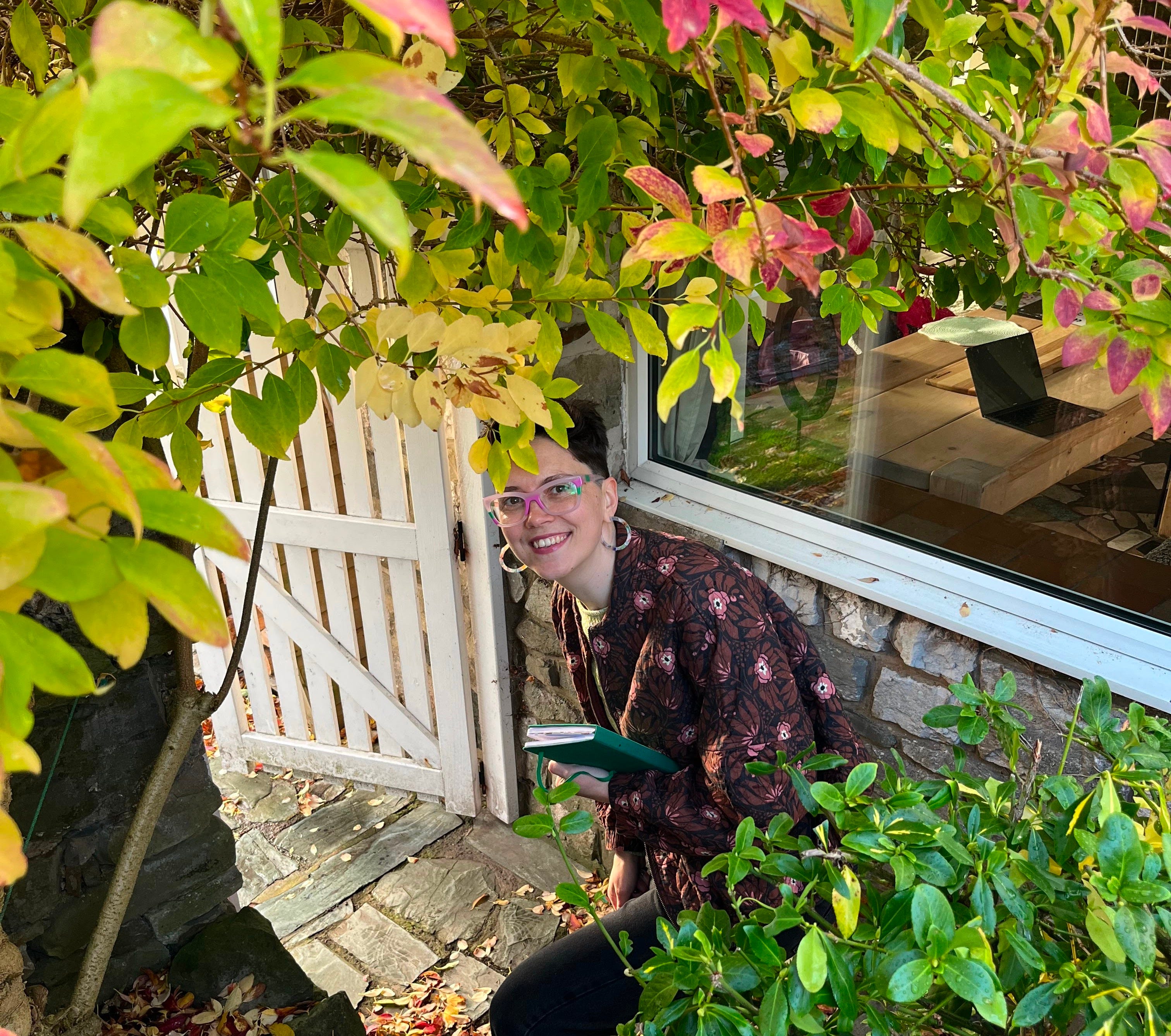
Hello you,
Are you a gardener? If so, how did you ‘get into’ it? How did you learn?
I’m trying to discover my green fingers, but like any new pursuit, it is completely overwhelming.
I also found myself searching ‘ADHD gardening tips’ the other day. I mean, gardening requires consistency and patience. These are not core skills of ADHD-ers. It is also common for us to get a rush of excitement and enthusiasm for a new hobby and then forget it exists. I feel sorry for the poor plants that start their lives in this way and then get abandoned.
But, I have had some success with taking tentative steps into gardening. And perhaps some of my early learnings might be helpful to you. Here’s some approaches I’ve found helpful.
Body Doubling
Body doubling is a proven, tried and tested ADHD hack. I use it a lot, both virtually and in real life.
“Body doubling is a way of doing tasks alongside another person or other people that can help you to stay focused and motivated. Those people might be in the same room, on a video call, or on the other end of a phone…
“For many people, especially neurodivergent people, that shared presence can make it easier to start tasks or keep going with them. Things that feel big or overwhelming alone can feel lighter when somebody else is nearby.” - Sam Colson, writing for Mental Health Matters
I’m not gonna lie, if my partner hadn’t been by my side showing me how to do things and working alongside me, I probably wouldn’t have started at all.
Another member of the family has also been helping;
‘Quick dopamine’ gardening
ADHD folks are often ‘dopamine seeking’ because our brains process it differently/ struggle to process it.
So I realised that I needed some quick early wins to help give me that dopamine hit and motivation to keep returning to my growing.
That’s why, when we went to choose some seeds, I chose ones that are ‘good and easy to grow with children’. Yes, I am a fully grown adult but I am taking inspiration from my nearly four-year-old nephew who is already better than me at gardening.
But the approach is working! Just one week after sowing, some of my seeds are already germinating. The cosmos in particular are coming on fast. So much so that I can see a difference every day that I go to check on them.
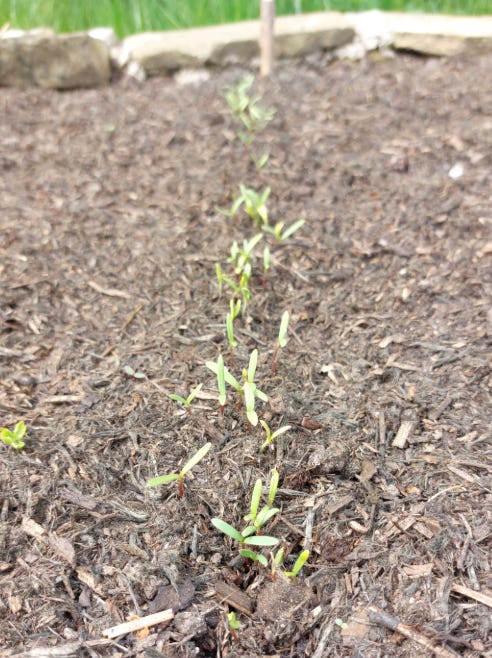
If they continue to thrive, I should also get future dopamine as I hope to enjoy some of them as cut flowers. And if I keep up with dead heading, they should continue to keep flowering and flowering for many weeks and months over summer. (Fingers crossed!)
Overcoming decision fatigue
I have found that having a pre-written ‘list of jobs’ has been helpful. So that when I go outside I already know what I’m going to do.
Decision fatigue with ADHD is real. I can often find myself in freeze mode because I’m mentally toggling through so many different possible tasks that I find myself unable to start one. Or I go to start one and see something which sparks another ‘to do’ in my brain and start doing that one.
I also saw a tip that it’s good to have your tools somewhere very accessible so you can just get started. This was my excuse to not put them away. But, fair enough, that idea has been vetoed my by partner. 😅
Accountability
I have created a special Gardening Motivation Whatsapp chat with my sister, who has just become a proud allotment plot holder. She’s very excited about her gardening project and I want to feed off some of this. So we’ve been sending each other updates about what we’ve been doing.
I’ve received photos of her courgette plants. (Some of which are being donated to me shortly!) And in return I’ve sent pictures of my raised bed.
Already it’s the most wholesome place to visit on my phone. And every time I do a job, even: ‘Weeded out front’. I can get the mini reward of sharing it in our chat.
If we keep it up. (Fingers crossed). It will also become a diary of our respective efforts.
Finding your why
Although gardening is a ‘lovely’ hobby, I’ve been inspired by role models who are reminding us about deep connection to land, about interconnectedness, reciprocity and sustainability.
I really appreciated Aja Barber’s recent Patreon post, What Community Role Would You Play In The Future? in which she shares that when she is anxious or hears about more harm being enacted by people in power she buys and sows seeds. And how over the past four years she has turned her garden into an ‘edible paradise’, meaning she has an abundance of plants to give friends and loved ones as gifts. (This post is generously free to read but I’d highly recommend becoming a paid member of her community!)
Over the past couple of years I’ve also been reading a fair few gardening related books. (Yes…instead of actually going and getting my hands dirty).
I’m currently reading a book called A Wilder Way by Poppy Okotcha with beautiful illustrations by Frances Whitfield which is also helping to cement my why I really do want to build my skills and knowledge of gardening.
“Growing some of our own food in the face of the overwhelmingly complex web of exploitation is radical. It allows us to divest from the system, feeds us, teaches us how it could be done and empowers us…
“We can start to notice in our wider lives the web of interconnectedness we observe in the garden. Tending a little patch of earth encourages us to care. It’s these shifts that can link us to one another and lead to positive change…
“When our gardens only serve as aesthetic oases for individuals to enjoy, they may be lovely, but they’re not radical.” - Poppy Okotcha, p.134 A Wilder Way
It’s okay (and necessary!) to start small
I’m currently reading a fantastic and validating new book by Allegra Chapman (she/her) called Divergent Creatives. She is a writer and creative therapy practitioner who, amongst other wonderful things, supports neurodivergent artists and creators. Gardening can definitely come under the list of creative acts, so this tip applies;
“My recommendation is to start small. Keep the bar so low you could trip over it…your only commitment to begin with is to play around and explore your creativity and see what comes up.”
We are incredibly fortunate that we have quite a large garden which is delightful to be in. But when we were deciding to move I said I didn’t want to be responsible for it. It seemed like ‘loads of work’ and super overwhelming. (The ADHD talking before I knew).
My partner has helped me to start tiny. Even though my brain sees it as one big cacophony of possibilities and jobs to be done.
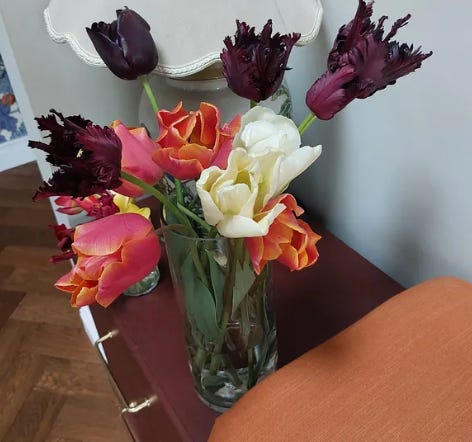
He built me two raised beds. So if I just look at the beds rather than zooming out to the whole garden, it feels a bit more achievable and motivating. In November we planted them up with daffodil and tulip bulbs which were a huge success and brought so much joy all through March, April and some of May. I’ve replanted many of those elsewhere so fingers crossed for some repeat blooms next year.
We’ve sown seeds in one of them and the other one is ready to be planted up, including with my sister’s courgettes :D
Also, writing this letter to you today is my way of keeping myself interested and accountable. So if you got this far, thanks for cheering me on!
If you have any tips or any responses to these ideas I’d love to hear them in the comments below.
Take it gently,
Janelle x
Thanks Janelle, so glad you're enjoying the book! I've been trying to get into gardening to, but struggle with the focus and remembering to care for everything! Not to mention learning all the different approaches each plant needs. I love the connection to the land though, and growing my own food and herbs. I've made it part of my morning ritual to "greet" (read: water!) my plants, and the broccoli seems to be thriving despite my ineptitude! 😁